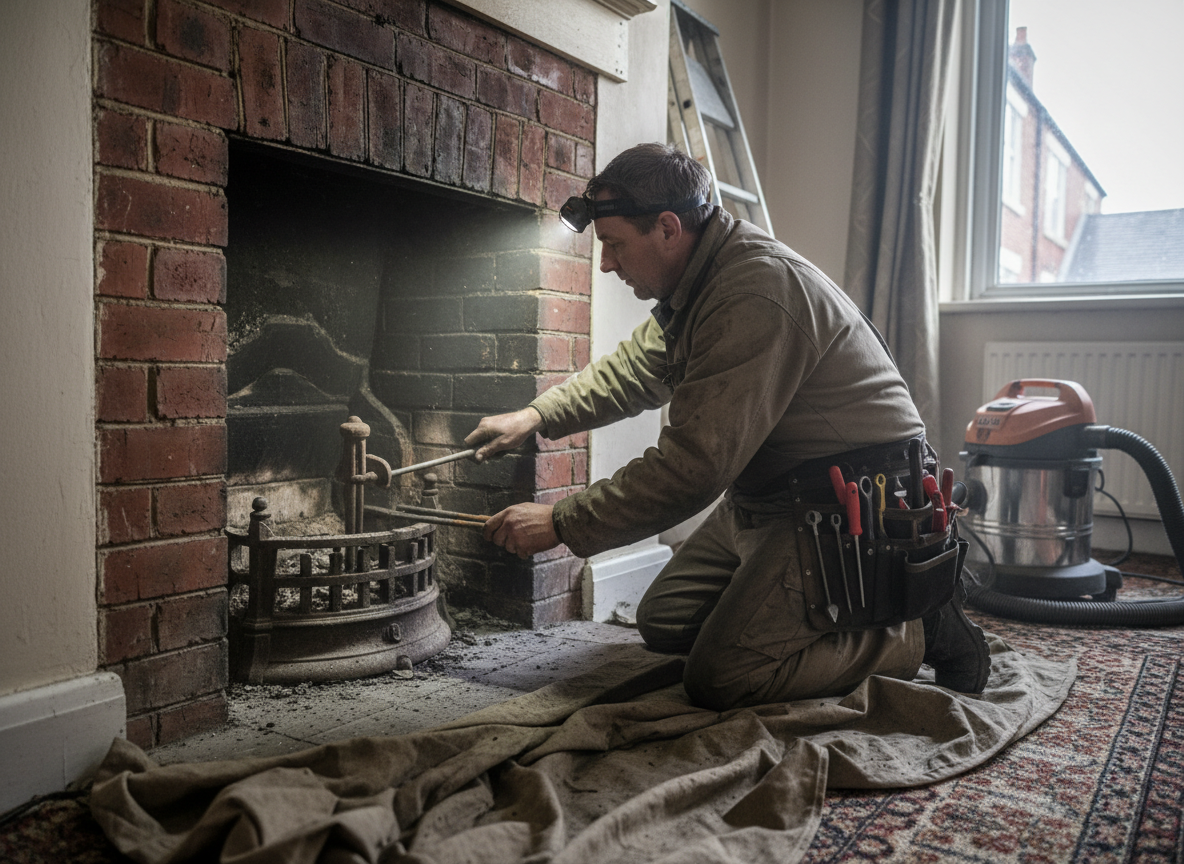
Manchester housing stock from the early 1900s through the 1960s commonly features masonry chimneys with cast-iron or steel throat dampers that corrode or warp after decades of creosote exposure. Once winter temperatures drop and heating systems run daily, these dampers often seize in the closed or partially open position, allowing cold air infiltration or blocking proper draft. Technicians at NexaroWorks inspect the linkage, pivot pins, and plate condition through the smoke chamber before any disassembly to avoid unnecessary masonry disturbance.
Edge cases in the Manchester area include dampers installed behind ornate Victorian mantels or in homes where later additions narrowed the flue, making standard replacement plates too wide. In those situations the existing plate is often custom-trimmed on site or swapped for a stainless retrofit that maintains the original opening size while restoring a tight seal. Homeowners frequently mistake a stuck damper for a blocked flue and attempt to force the handle, which can shear the lever arm and turn a simple repair into a full smoke-chamber rebuild.
Code considerations in Manchester require that any damper replacement preserve the required flue size for the connected appliances; undersized plates can trigger CO issues during inspections. NexaroWorks always verifies clearance to combustibles around the throat before closing up and leaves the old hardware with the homeowner so the change is documented for future service calls.
Seasonal Considerations
Late-fall inspections catch dampers before they freeze in place, while mid-winter calls often require temporary plywood covers over the flue top until the mechanism can be freed or replaced.
Technician insight
In Manchester the thing that catches most people out with chimney damper repair is the early-1900s row houses along the Merrimack where the original cast-iron dampers sit behind narrow throats that later additions made even tighter; forcing the handle usually shears the arm and forces a larger masonry opening job than anyone expected.
Seized Damper in 1920s Manchester Home
Homeowner reported cold drafts and difficulty starting fires. Inspection showed the original cast-iron plate frozen shut from creosote and years of winter use. The linkage was freed, pivot pins replaced, and a stainless insert plate installed to restore seal without altering flue size. Draft test confirmed proper operation and the homeowner kept the old hardware for records.
How it works
- 1
Initial Inspection
Technician accesses the smoke chamber from the firebox or cleanout to assess damper plate, linkage, and surrounding masonry condition.
- 2
Diagnosis and Access
Handle operation is tested; if seized, penetrating oil and gentle manipulation are used before considering partial disassembly.
- 3
Repair or Replacement
Pivot pins are lubricated or replaced; warped plates are swapped for stainless units sized to the existing flue opening.
- 4
Verification
Draft is checked with a smoke test and the damper is operated through full range before the job is complete.
Pricing
Upfront quotes provided after on-site inspection; cost driven by access difficulty and whether custom plate fabrication is required.