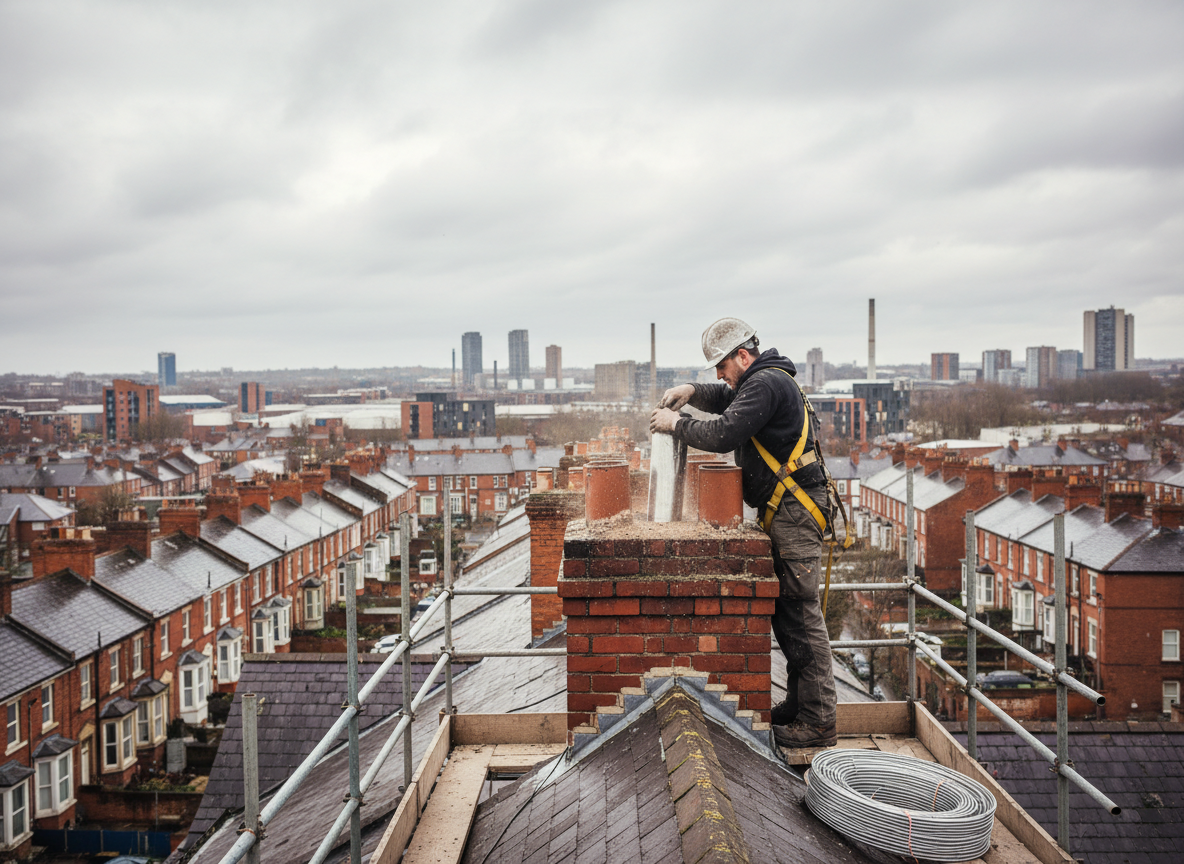
Manchester NH homes built before 1970 often have unlined or clay-lined chimneys that crack from repeated freeze-thaw cycles. Relining with a stainless steel or cast-in-place liner creates a smooth, insulated flue that improves draft and reduces creosote accumulation during long heating seasons. The work requires removing the old liner remnants, measuring the flue for proper sizing, and installing the new liner with insulation to meet current NFPA 211 clearance rules.
Edge cases include offset flues common in two-story Victorian houses near downtown Manchester where the liner must navigate bends without kinking. Water intrusion from roof valleys around the chimney crown is another frequent issue; we inspect for missing flashing before the liner goes in. Homeowners notice slower draft or odors when the old liner has deteriorated, especially after heavy snow loads sit on the roof.
Relining is required when a chimney fails a level II inspection or when switching to a higher-efficiency wood or pellet stove. We use 304 or 316 stainless steel based on fuel type and run the liner from the appliance collar to the cap. Proper termination height above the roofline prevents downdrafts from nearby buildings on Manchester's flatter terrain.
The job typically takes one day once the flue is cleaned and inspected. After installation we perform a smoke test to confirm the liner seals correctly and restores full draft. Skipping insulation around the liner in uninsulated chase walls can lead to condensation and rapid corrosion in New Hampshire winters.
Technician insight
In Manchester the thing that catches most people out with chimney relining is how often the clay flue tile has shifted from decades of snow load on the roof; the liner then has to be custom bent around the offset instead of running straight, which adds time and requires a thicker insulation jacket to keep the chase wall from icing up.
Shifted Flue in a 1940s Cape
Homeowner reported slow draft and smoke smell after switching to a wood stove. Camera showed cracked clay tile and a 4-inch offset on the second floor. We removed the broken tile sections, installed a flexible stainless liner with extra insulation, and re-flashed the crown. Draft returned to normal and the smoke odor disappeared.
How it works
- 1
Initial Inspection
We perform a camera inspection of the flue from the firebox to the cap to identify cracks, offsets, and creosote depth.
- 2
Flue Preparation
Old liner material is removed, the flue is cleaned, and any loose masonry is stabilized before measuring for the new liner.
- 3
Liner Installation
A stainless steel liner sized to the appliance is inserted with insulation wrap, then connected to the stove or fireplace collar.
- 4
Final Testing
A smoke test confirms draft and sealing, followed by reinstallation of the chimney cap and flashing checks.
Pricing
Pricing depends on flue height, number of offsets, and liner material; we provide an on-site quote after inspection.