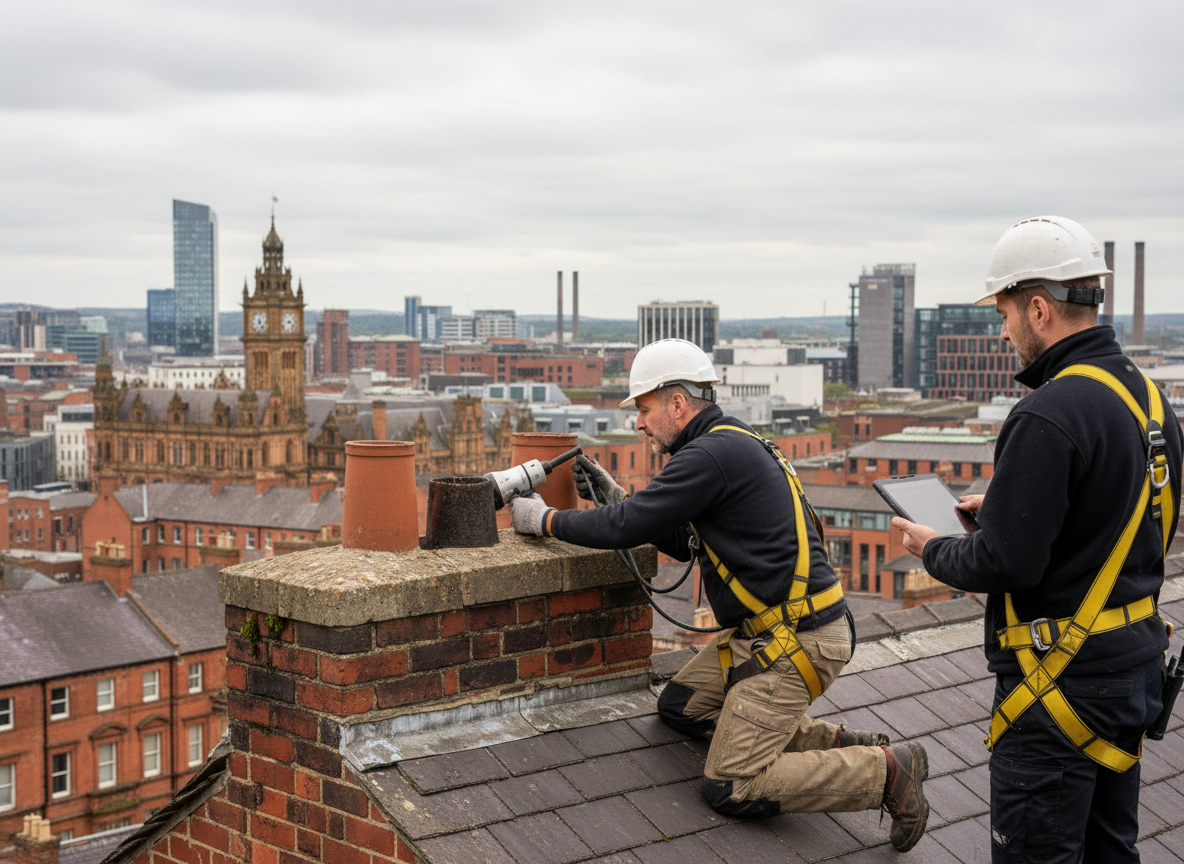
Chimney inspections in Manchester Township focus on older brick and masonry stacks common in Ocean County homes built from the 1960s onward. Moisture from coastal humidity and freeze-thaw cycles often leads to spalling bricks and deteriorated mortar joints that allow water to reach the flue liner. A level-2 inspection with a camera is frequently required once visual signs like white efflorescence or missing crown sealant appear, especially after heavy winter use when creosote buildup hardens inside the flue.
Homeowners in Manchester often overlook the transition point where the chimney passes through the attic. Here, missing or compressed insulation can create a fire hazard when combined with cracked flue tiles. Inspectors also check for proper clearance to combustible framing and verify that the chimney cap still seals against driving rain common during nor'easters. These details directly affect whether a simple tuckpointing job will suffice or if a full liner replacement becomes necessary.
Edge cases arise with manufactured homes and additions in the Manchester area where chimneys were added after original construction. Offset flues and non-standard clearances frequently violate current code even if the original install passed inspection decades ago. Early detection during an inspection prevents carbon monoxide migration into living spaces when negative pressure from modern HVAC systems pulls exhaust backward.
Technician insight
In Manchester, the thing that catches most people out with chimney inspection service is water damage at the attic transition on split-level homes built in the 1970s. The roof pitch and limited crawl space make it easy to miss until the ceiling shows stains. Checking that spot first changes the whole job scope.
Hidden Flue Crack Found in Manchester Ranch
Homeowner noticed slow draft on cold mornings. Camera revealed a vertical crack in the clay tile just above the smoke chamber. We documented the damage, confirmed no active creosote ignition risk, and scheduled a liner install before the next heating season.
How it works
- 1
Schedule and Prepare
Confirm access to the roof and fireplace, then review any prior service history for the specific chimney.
- 2
Exterior Visual Check
Examine crown, flashing, bricks, and cap for water intrusion points common after Manchester winters.
- 3
Interior Camera Scan
Run a video inspection through the flue to document creosote, tile cracks, and liner condition.
- 4
Report and Recommendations
Deliver written findings with photos and prioritized repair options based on observed conditions.
Pricing
Cost depends on chimney height, access difficulty, and whether a camera scan is needed.