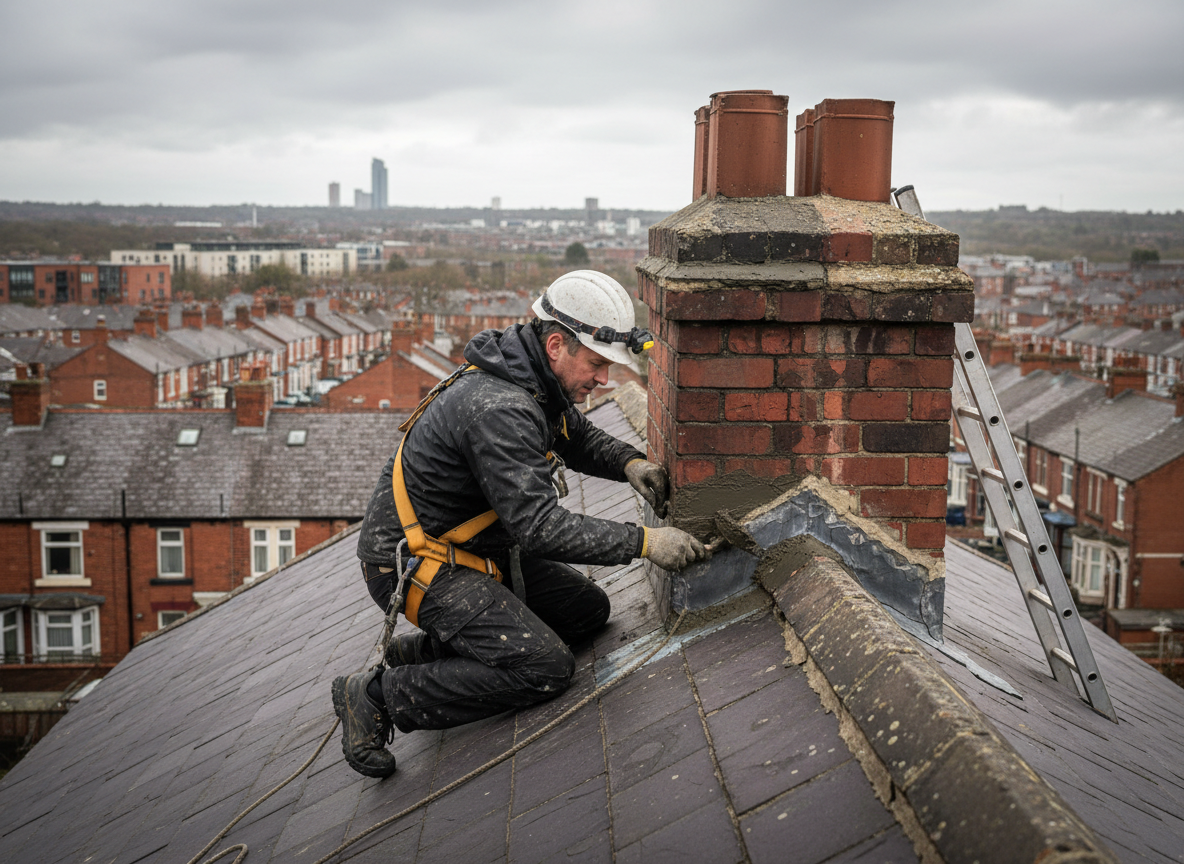
Chimney leaks in Manchester often start at the crown or where the flue meets the roofline. Older brick chimneys common throughout the area absorb moisture during heavy coastal rains and freeze-thaw cycles, allowing water to migrate into attics and walls. Proper repair requires removing failed mortar, installing new stainless-steel flashing that ties into existing shingles, and rebuilding the crown with a slope that sheds water away from the flue. Skipping the step of checking the chimney chase for hidden rot leads to repeated leaks within a season.
Many Manchester properties built before 1980 have clay flue liners that crack under thermal shock from wood-burning stoves. When rain enters these cracks it saturates the surrounding masonry and eventually stains ceilings. A full leak repair includes camera inspection of the liner, installation of a cast-in-place liner if needed, and resealing the top plate with high-temperature silicone rated for the local temperature swings. Homeowners who attempt DIY caulking around the crown usually see water reappear after the first nor'easter.
Terrain around Manchester's pine barrens creates extra runoff that pools against foundations and chimney bases during prolonged storms. This standing water accelerates deterioration at the chimney footing and forces moisture upward through the masonry. Effective repair therefore includes grading the soil away from the base and installing a metal drip edge that extends six inches beyond the concrete pad. Without this step, even a perfect crown repair fails within two winters.
Technician insight
In Manchester, the thing that catches most people out with chimney leak repair is how the flat terrain and clay-heavy soil let rainwater sit against the chimney base for days after a storm. Homeowners focus on the roofline but miss the footing where water wicks upward through the old brick. Once that happens the only lasting fix is to excavate and add drainage before touching the crown.
Ceiling Stain After Nor'easter
Problem: water stains appeared on the second-floor ceiling after a coastal storm. What we found: cracked crown and separated flashing on a 1970s brick chimney. What we did: rebuilt the crown, installed new step flashing, and added a drip edge at the base. Outcome: no further moisture after the next heavy rain.
How it works
- 1
On-Site Inspection
Technician climbs the roof and uses a moisture meter plus camera to locate every active leak point in Manchester conditions.
- 2
Diagnosis and Scope
Report details whether the crown, flashing, liner, or base is the primary source and what materials will be required.
- 3
Targeted Repair
Remove damaged sections, install new flashing and crown, or reline the flue as needed while protecting surrounding shingles.
- 4
Water Test and Cleanup
Simulate heavy rain to confirm the repair holds, then document the work and leave the site clean.
Pricing
Upfront quotes after inspection; cost depends on whether only the crown needs rebuilding or a full liner is required.