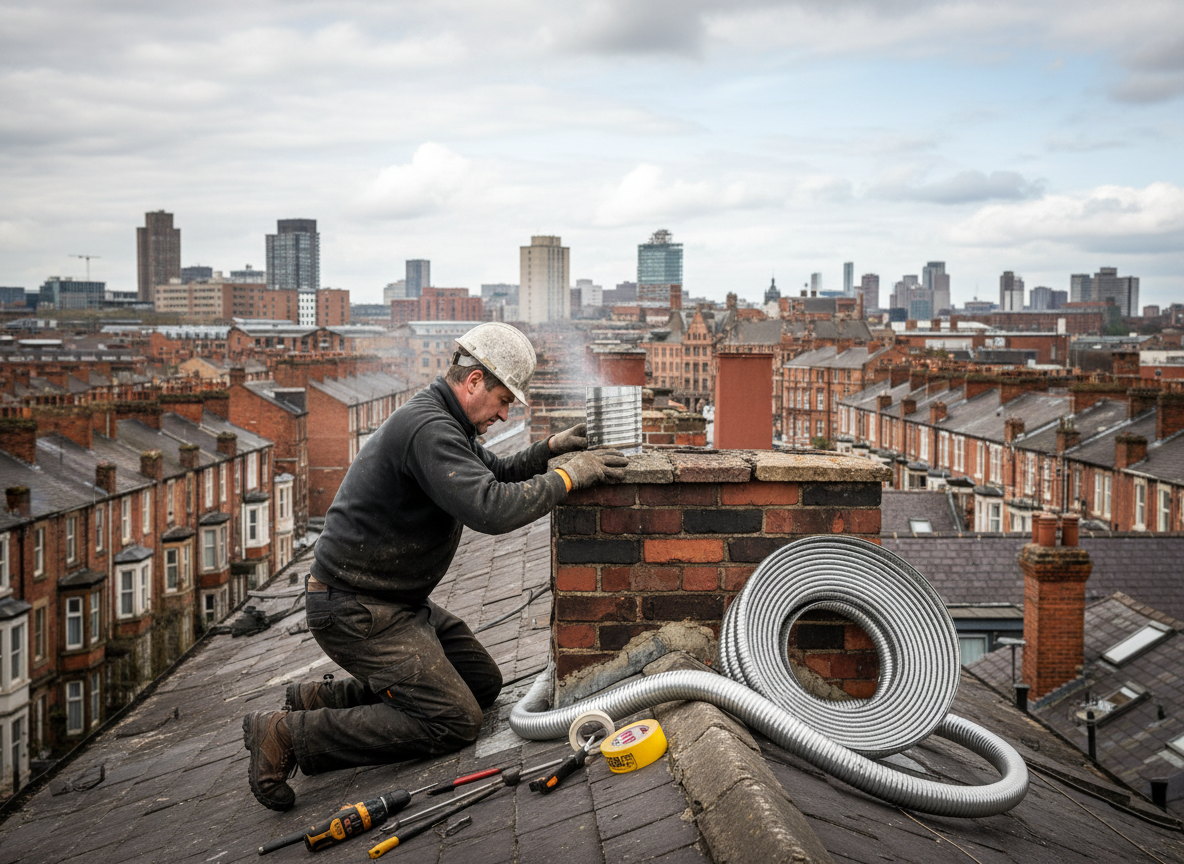
Chimney liner repair addresses the protective flue that carries combustion gases safely out of the home. In Manchester-area houses built from the 1950s through the 1980s, many still rely on clay tiles that crack from repeated freeze-thaw cycles common in the region. A failed liner allows creosote to seep into masonry joints and can send carbon monoxide into living spaces. NexaroWorks techs begin every job by scoping the flue with a camera to locate exact breach points before deciding between a poured-in-place solution or a stainless steel insert.
Access is often the biggest variable on Manchester jobs. Split-level homes and those with finished basements require dropping sections of ceiling or working through tight attic spaces. When the liner runs near exterior walls exposed to prevailing winds off the nearby hills, we add extra insulation sleeves to prevent cold spots that accelerate condensation and acid attack on the new liner. Homeowners are shown the camera footage on site so they can see why a simple patch will not hold versus a full-length replacement.
Local building practices sometimes left flues undersized for modern wood stoves or gas inserts. We measure draft requirements on every repair and note when a larger-diameter liner is needed to meet current IRC standards. Skipping this step leads to backdrafting during shoulder seasons when outdoor temperatures hover near indoor ones. All work is performed with the understanding that the homeowner can inspect the finished liner before any final sealing.
Technician insight
In Manchester, the thing that catches most people out with chimney liner repair is the way older cap-and-crown details let water sit against the flue tile for months. Once that freeze-thaw cycle starts in the narrow space between liner and brick, the damage travels downward faster than homeowners expect, especially on north-facing chimneys near the old mill neighborhoods.
Cracked Clay Liner in Split-Level Home
Homeowner noticed faint smoke odor on cold mornings. Camera revealed a cracked clay liner two feet above the smoke chamber. We removed the damaged section, installed a stainless steel liner with insulation, and added a new top plate to stop water entry. Draft returned to normal and the odor disappeared.
How it works
- 1
Initial Camera Inspection
We run a high-resolution camera through the flue from the top and bottom to map cracks, offsets, and creosote buildup.
- 2
Liner Assessment and Recommendation
Based on footage and draft testing we explain whether a stainless insert, cast-in-place, or hybrid repair fits the chimney construction.
- 3
Liner Installation
The chosen liner is installed with proper insulation and termination cap, then reconnected to the appliance with sealed joints.
- 4
Final Verification
A second camera pass and smoke test confirm the liner is continuous and draft is restored before the job is complete.
Pricing
Cost depends on liner material, chimney height, and access difficulty; we provide an upfront quote after inspection.