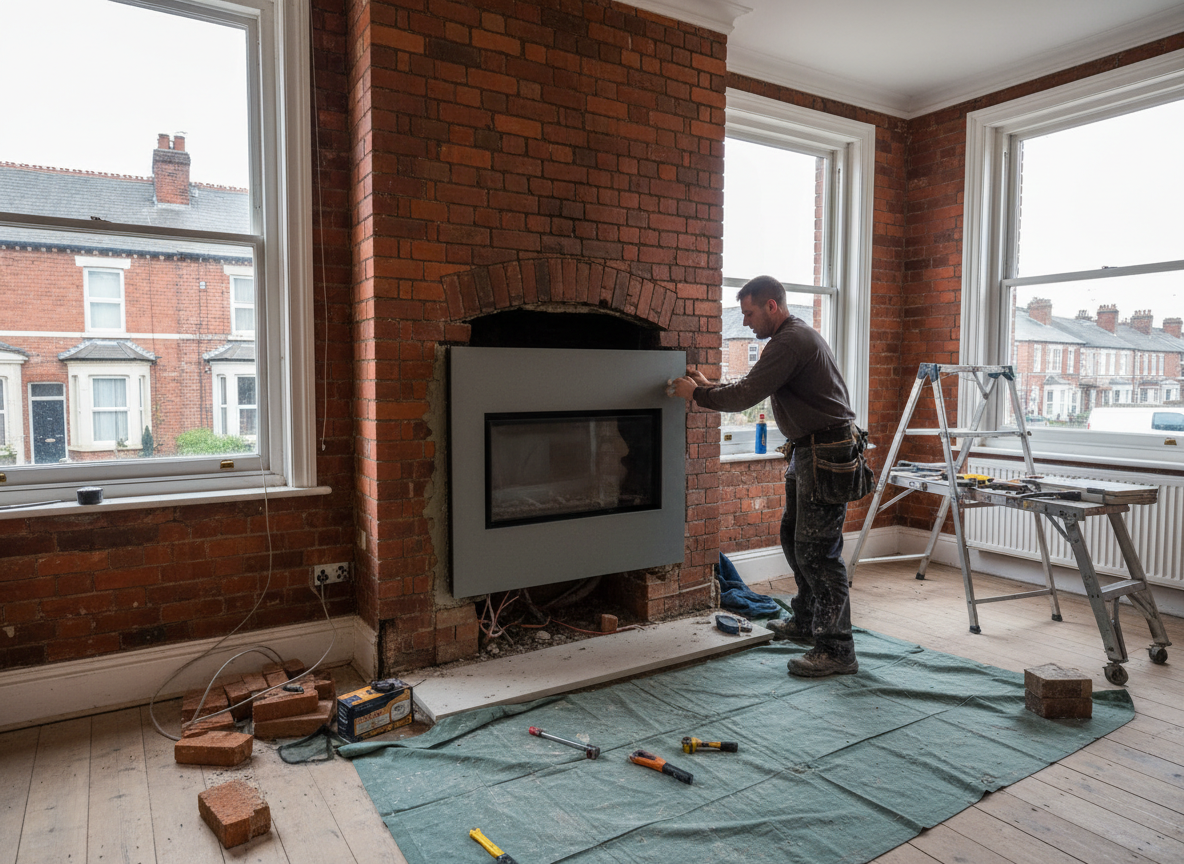
Fireplace installation in Manchester, NH requires careful attention to older brick and frame homes common throughout the city. Many properties built before 1970 have existing chimneys that need inspection for proper flue sizing and draft before any new unit goes in. Cold winters with repeated freeze-thaw cycles can shift foundations and crack masonry, so installers must verify the chimney base and liner condition first. Skipping this step often leads to smoke issues or carbon monoxide risks once temperatures drop.
Gas and wood-burning inserts both demand precise clearance measurements around combustible materials in tight Manchester neighborhoods like those near the Merrimack River. Proper venting through the roof or sidewall must account for prevailing winds and snow load on the roofline. Homeowners frequently overlook the need for dedicated gas lines or electrical circuits rated for the unit, which can delay completion if not planned ahead. Local building codes also require permits and inspections to confirm the installation meets current safety standards.
Edge cases arise with multi-story homes where chimney height affects draft performance during heavy snow years. Technicians check for creosote buildup patterns typical in the region and may recommend stainless steel liners to handle acidic condensation from frequent use. Always confirm the fireplace is sized correctly for the room volume to avoid inefficient burning or overheating nearby walls.
Technician insight
In Manchester, the thing that catches most people out with fireplace installation is older chimney foundations shifting from repeated freeze-thaw cycles around downtown neighborhoods, which often requires extra base stabilization before the unit can be safely set.
Older Manchester Home Fireplace Upgrade
Homeowner requested a wood insert in a pre-1960s property near the river. Inspection revealed cracked flue and poor draft from foundation movement. We stabilized the base, installed a stainless liner sized for local snow loads, and completed the insert mounting. The system now draws correctly without smoke spillage during cold snaps.
How it works
- 1
Site Assessment
Inspect existing chimney, measure clearances, and evaluate foundation stability for Manchester winter conditions.
- 2
Unit Selection and Planning
Match insert or fireplace type to home layout, venting path, and local code requirements.
- 3
Installation and Liner Work
Install unit, run proper venting, and add liner if needed to handle regional freeze-thaw stress.
- 4
Final Testing and Handover
Perform draft test, safety check, and review operation with homeowner.
Pricing
Cost depends on chimney condition, insert type, and any liner or foundation repairs needed; upfront quotes provided after assessment.