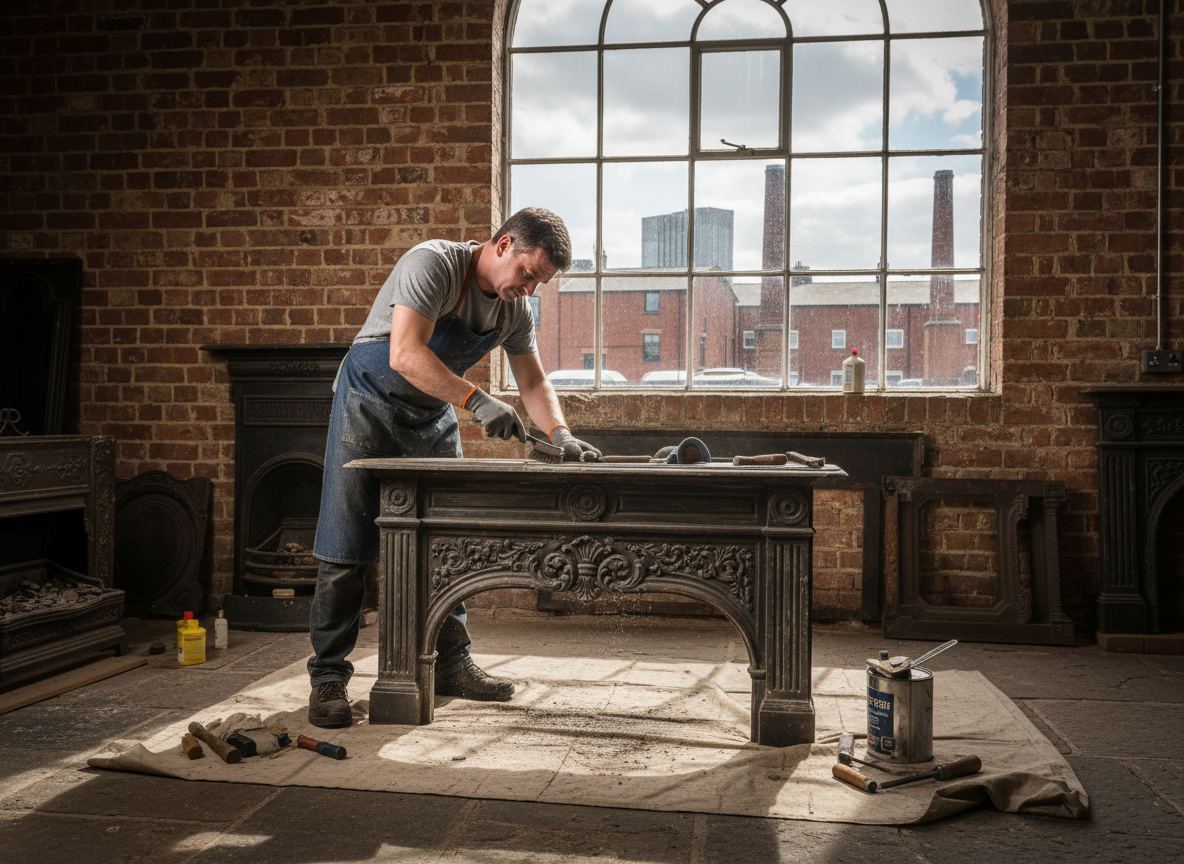
Manchester Township homes often feature masonry fireplaces installed between the 1960s and 1980s. Over time the combination of freeze-thaw cycles and occasional coastal humidity breaks down mortar joints and spalls firebrick. Restoration begins with a full inspection of the firebox, throat, and smoke chamber to identify hidden cracks before any rebuilding starts.
Refractory panels in many local units were never rated for the sustained heat produced by modern wood-burning inserts. When these panels crack, heat migrates into the surrounding framing. Replacement requires removing the old panels, cleaning the steel or masonry backing, and installing new panels with the correct high-temperature adhesive so expansion gaps remain functional.
Homeowners frequently attempt cosmetic fixes with standard fireplace mortar that fails within one heating season. Proper restoration uses refractory cement rated to 2000 °F and stainless-steel ties where the original anchors have rusted. All work is left exposed for inspection before any facing is reinstalled.
Technician insight
In Manchester, the thing that catches most people out with fireplace restoration is how quickly the high water table around Ocean County lets moisture wick up through the foundation and saturate the lower firebox joints during our wet springs.
Deteriorated Firebox in Manchester Township
Homeowner reported smoke rolling into the living room on cold nights. Inspection showed spalled firebrick and missing mortar at the rear wall caused by repeated freeze-thaw. Panels were replaced with rated refractory, joints repointed, and a low burn confirmed proper draft with no smoke leakage.
How it works
- 1
Initial Assessment
Technician examines the firebox, damper, and flue from inside the home and from the roof to map all visible and hidden damage.
- 2
Material Removal
Failed brick, mortar, and refractory panels are carefully cut out without disturbing sound surrounding masonry.
- 3
Rebuild and Seal
New refractory panels and mortar are installed with proper expansion joints, then the entire repair is pointed and cured.
- 4
Final Test
A low-burn test confirms draft, smoke containment, and absence of new cracks before the fireplace is returned to service.
Pricing
Upfront quotes provided after inspection; cost driven by extent of refractory replacement and access.