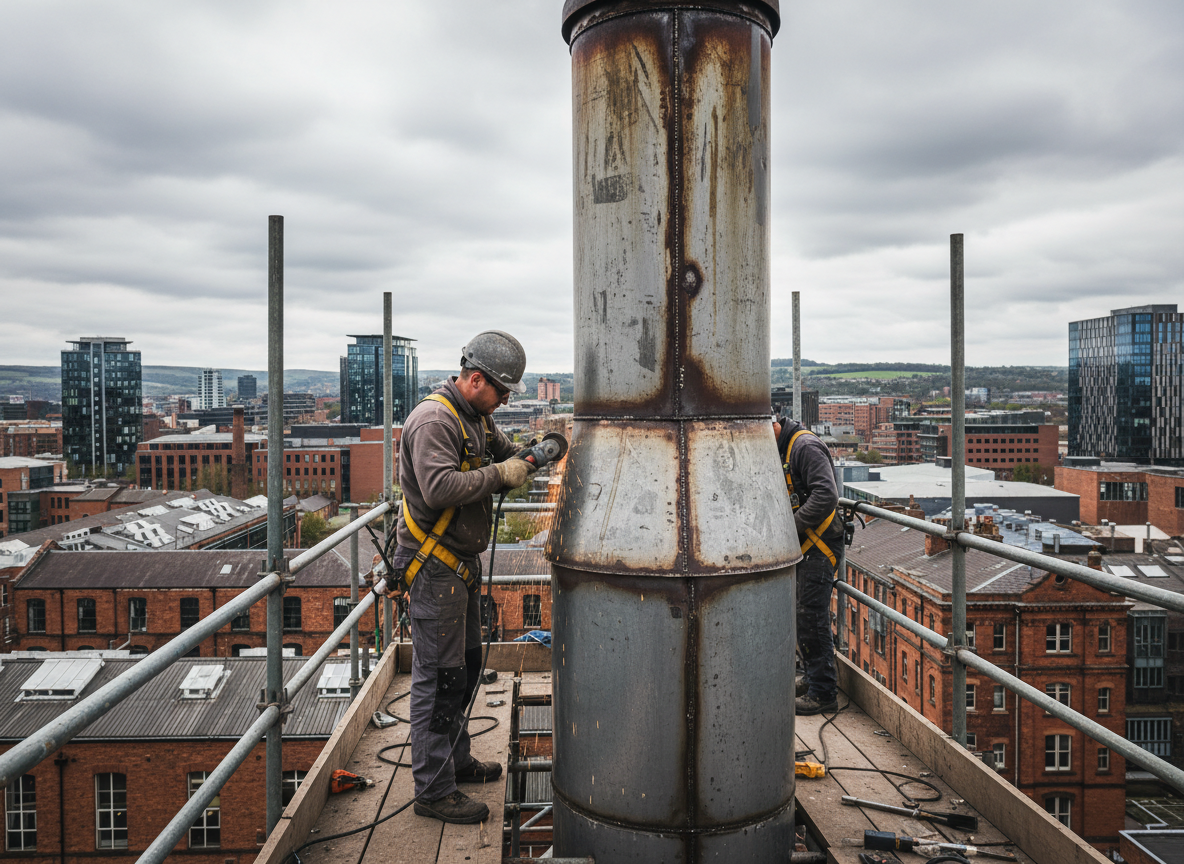
Metal chimneys in Manchester require attention to the liner material and connection points where thermal cycling loosens seams. Older installations often use single-wall or double-wall stainless that develops pinhole leaks after repeated heating and cooling cycles. We inspect the full height of the flue, checking for creosote buildup that holds moisture against the metal and speeds rust-through. Proper repair involves cutting out failed sections and installing new liner segments with high-temperature sealant rated for the flue gas temperatures typical in wood-burning systems.
Coastal humidity and occasional nor'easters in the Manchester area push water past crown flashings and into the chase, accelerating exterior corrosion on metal chimneys. Homeowners frequently overlook the transition from the appliance to the first flue section, where vibration from the furnace or stove can crack the collar. We replace damaged collars with stainless bands and re-secure the chimney cap to maintain draft while preventing rainwater entry. All work follows current IRC requirements for clearance to combustibles and proper termination height above the roofline.
Edge cases include chimneys serving oil-fired equipment where sulfur in the fuel creates acidic condensate that eats through metal faster than wood smoke alone. We test draft with a manometer before and after repairs to confirm the flue pulls correctly once the new sections are in place. Homeowners should never attempt temporary tape or sealant patches on active metal flues, as these fail quickly and allow carbon monoxide migration into living spaces.
Technician insight
In Manchester the thing that catches most people out with metal chimney repair is how quickly single-wall liners rust from the inside once the protective coating is breached by acidic condensate in older homes near the bay. Homeowners often seal the exterior only and miss the internal pinholes that let smoke into the chase.
Rusted Metal Liner Sections
Homeowner reported intermittent smoke smell on windy days. Inspection revealed multiple pinholes in the lower metal liner sections caused by long-term condensate exposure. We replaced the affected lengths with new stainless pipe and resealed the appliance collar. Draft readings returned to normal and the odor disappeared.
How it works
- 1
Initial Inspection
We examine the entire metal chimney from appliance connection to cap, noting corrosion locations, seam gaps and any chase damage.
- 2
Diagnosis and Quote
Findings are documented with photos and an upfront quote is provided before any repair work begins.
- 3
Section Replacement
Failed metal segments are removed and new stainless liner pieces are fitted with sealed joints rated for flue temperatures.
- 4
Final Testing
Draft is verified and the system is checked for leaks before the job is considered complete.
Pricing
Upfront quotes provided after inspection; cost depends on chimney height, number of sections replaced and access difficulty.