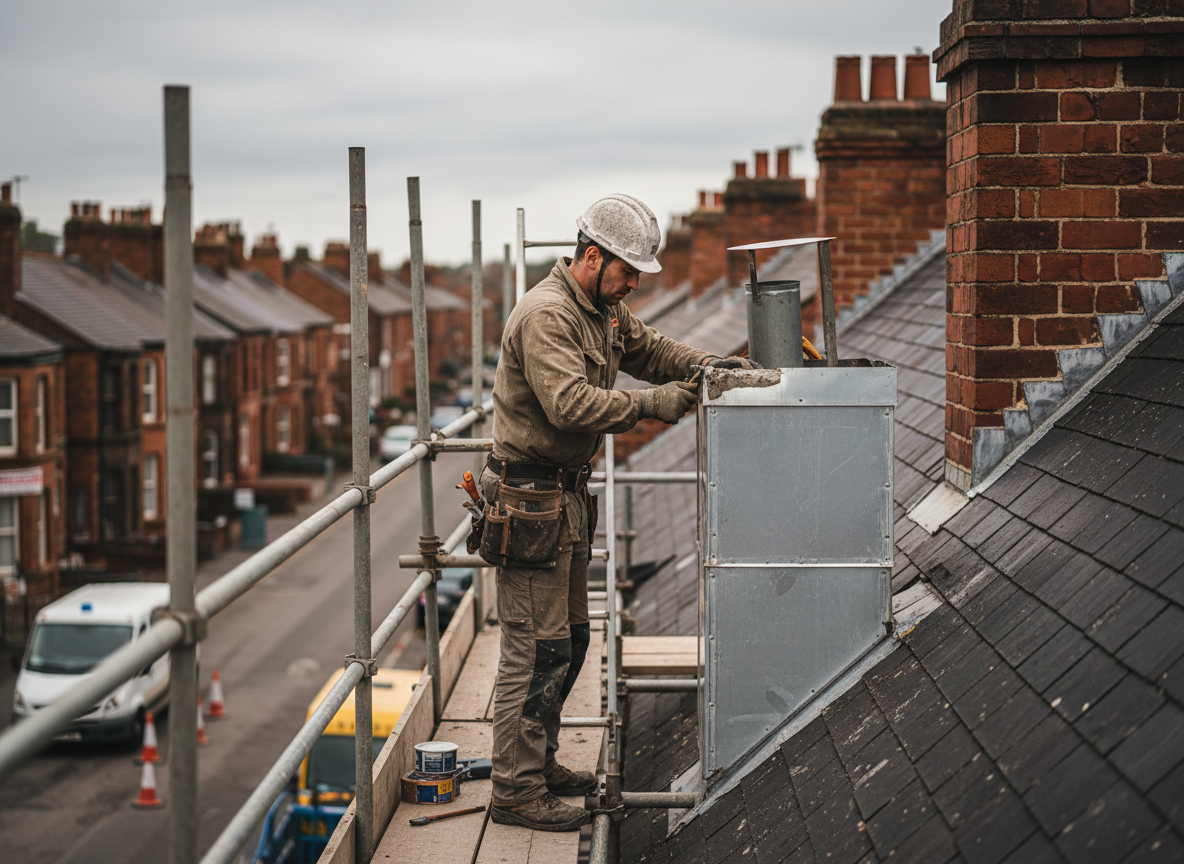
Prefabricated chimneys consist of factory-built metal sections that require precise alignment and sealed joints to maintain draft and prevent leaks. In Manchester homes, these units often show wear at the connections between sections where thermal expansion and contraction loosen the original gaskets. Technicians must check for proper clearances to combustible framing, a common issue in older modular construction found throughout the Manchester area.
Repair work frequently involves replacing deteriorated flue liners or reinforcing anchor plates that have pulled away from the roof deck due to wind exposure common along the Jersey coast. Access can be limited on ranch-style homes prevalent in Manchester neighborhoods, requiring specialized ladders and roof protection to avoid damaging shingles. Code compliance for termination height above the roofline must be verified during every service call.
Homeowners sometimes attempt temporary sealing with caulk that fails quickly under heat cycling. Proper repair instead calls for manufacturer-approved components matched to the existing model to avoid voiding any remaining warranty. In the Manchester area, soil movement from seasonal freeze-thaw cycles can also shift the chimney base slightly, creating new stress points that only become visible after interior inspection.
Technician insight
In Manchester, the thing that catches most people out with prefabricated chimney repair is how the original thin metal sections on 1970s-1980s homes corrode from the inside out at the seams, often hidden until a full disassembly shows the extent.
Corroded Joints on Ranch Home Chimney
Homeowner noticed water stains near the fireplace during heavy rain. Inspection revealed failed gaskets at two mid-level sections allowing moisture entry. Replacement of the affected sections and new seals restored the draft and eliminated the leak.
How it works
- 1
Initial Assessment
Inspect the full length of the prefabricated chimney from basement to termination, checking joints, liners, and clearances.
- 2
Component Evaluation
Identify failed gaskets, corroded sections, or anchor issues specific to the unit's age and installation.
- 3
Targeted Repair
Replace or reseal affected parts using approved materials and restore proper alignment.
- 4
Final Testing
Perform a draft test and visual confirmation to ensure safe operation before leaving the site.
Pricing
Upfront quotes provided after inspection; final cost depends on number of sections requiring work and roof access difficulty.