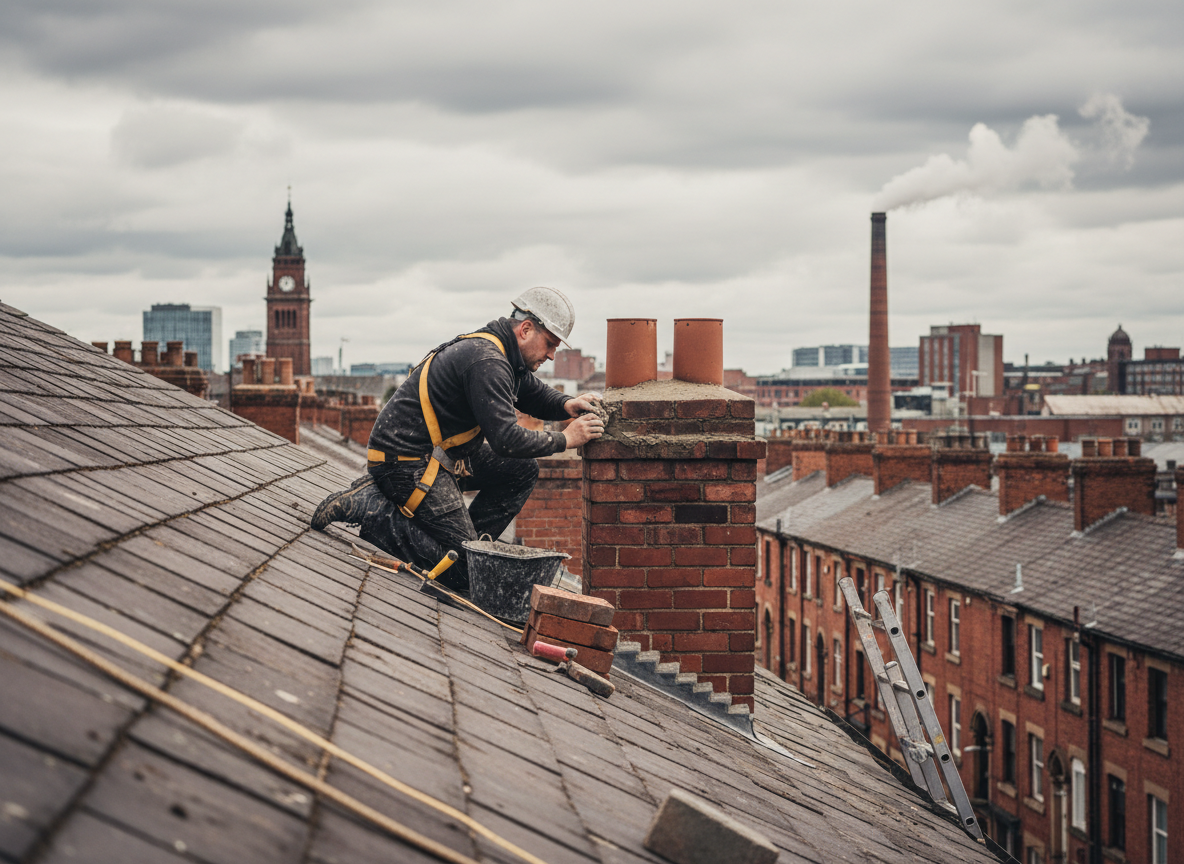
Roof chimney repair starts with checking how the chimney penetrates the roof deck and how the flashing integrates with existing shingles or slate. In Manchester homes built before the 1980s, the original step flashing is often nailed directly into the chimney mortar instead of being properly counter-flashed, allowing water to travel behind the brick during freeze-thaw cycles. We remove failed flashing, install new lead or copper step flashing, and seal the top with a new crown that slopes away from the flue.
When the crown has cracked or the wash has eroded, water enters the flue liner and saturates the brick from inside. This shows up as efflorescence on interior walls or damp spots on second-floor ceilings after heavy rain. We cut out the old crown, repoint the top courses, and pour a new concrete cap with a drip edge that extends beyond the brick face so water sheds clear of the roof surface.
Edge cases include chimneys that share a wall with a neighbor or sit on a steep pitch where scaffolding is required. We always verify the condition of the roof underlayment around the penetration before closing the job, because replacing flashing without addressing rotted sheathing only moves the leak. All work is done from the roof, not from inside the flue, to avoid disturbing active heating systems during the heating season.
Technician insight
In Manchester the thing that catches most people out with roof chimney repair is how many pre-1970 capes still have the original tar paper tucked under the shingles but no counter flashing, so once the crown cracks the water follows the paper straight into the second-floor ceiling.
Cracked Crown on Pine Street Cape
Water was staining the master bedroom ceiling after every storm. We found the crown had separated from the brick and step flashing was nailed into the mortar. We removed the crown, installed new copper flashing, and poured a fresh cap with proper overhang. No more stains appeared after the next heavy rain.
How it works
- 1
Inspection
We climb the roof to examine flashing, crown, and mortar joints, then check the attic for water stains around the chimney.
- 2
Material Removal
Failed flashing and damaged crown material are cut out without disturbing sound brick or roof decking.
- 3
Flashing and Crown Work
New step flashing is installed and a fresh crown is formed with proper slope and overhang.
- 4
Final Check
We run water across the repair and inspect the attic again before leaving the site.
Pricing
Upfront quote given after roof inspection; price varies with roof pitch, chimney height, and extent of flashing replacement needed.