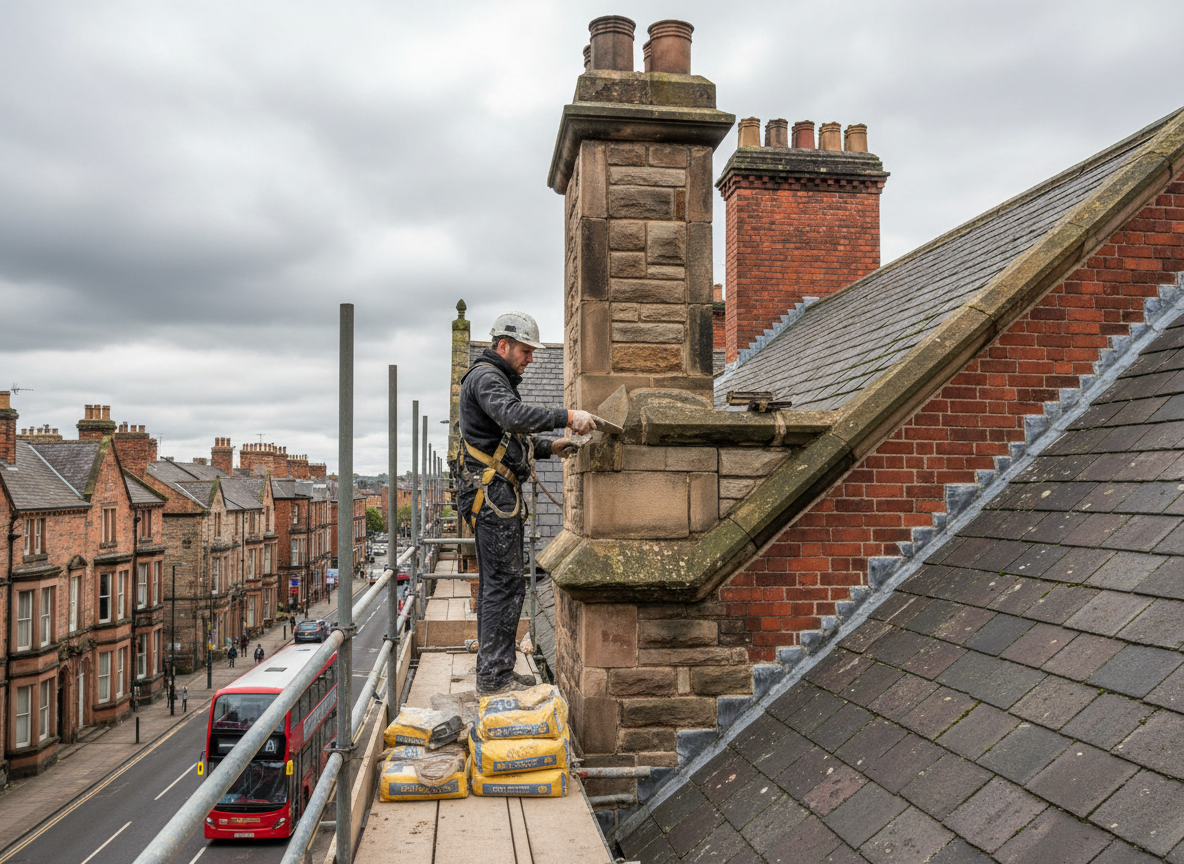
Stone chimneys in Manchester homes often suffer from mortar joint deterioration due to repeated freeze-thaw cycles and heavy coastal moisture. Over time this allows water intrusion that loosens individual stones and undermines the flue liner. Technicians working in Ocean County routinely find that older masonry in neighborhoods near Route 70 requires selective stone replacement rather than full rebuilds when caught early. Proper repointing with lime-based mortar matched to the original mix prevents further cracking while allowing the structure to breathe.
Edge cases appear when chimneys intersect with roof valleys or sit on homes built on slight slopes common around Manchester. Water sheds unevenly and pools against the stone base, accelerating spalling on the north-facing side. Code compliance in the area calls for maintaining proper clearance from combustible framing and ensuring the cap directs runoff away from the crown. Skipping these details during repair leads to interior leaks that homeowners mistake for roof issues.
When stones shift, the entire flue alignment can change enough to create draft problems or allow creosote buildup on uneven surfaces. A thorough inspection includes checking the bond between the stone veneer and the backup brick or block, especially on two-story structures where wind loads are higher. Repairs focus on resetting or replacing only the affected stones while preserving the original character of the masonry.
Seasonal Considerations
Winter prep in Manchester includes sealing open joints before the first hard freeze to stop water from expanding behind the stone face. Spring inspections after snow melt often reveal displaced cap stones or cracked crowns that went unnoticed during heating season.
Technician insight
In Manchester, the thing that catches most people out with stone chimney repair is how quickly water gets behind the veneer on homes built on the slight grades near the Pine Barrens; once it freezes, a single loose stone can turn into a whole section needing attention because the original mortar was never meant to handle the constant moisture cycling we see here.
Shifted Corner Stone on Two-Story Home
Homeowner noticed daylight through a joint near the roofline after a heavy rain. Inspection showed one corner stone had dropped half an inch due to eroded mortar at the base. The crew removed the loose stone, cleaned the cavity, installed a new matching stone, and repointed the surrounding joints while checking the flue alignment. Draft returned to normal and no further water entry occurred.
How it works
- 1
Initial Assessment
Technician examines the full height of the stone chimney from roof to foundation, noting mortar condition, stone movement, and water entry points.
- 2
Damage Documentation
Photos and measurements record which stones need resetting or replacement and whether the flue liner requires attention.
- 3
Selective Repair
Failed mortar is removed, stones are reset or replaced with matching material, and new pointing is applied in small sections to maintain structural integrity.
- 4
Final Inspection
Chimney is checked for draft, water shedding, and code clearances before the job is complete.
Pricing
Cost depends on the number of stones requiring work, access difficulty, and whether flue liner repairs are needed at the same time.